Bacterial Isolate Typing


Bacterial Isolate Typing

Our Bacterial Isolate Typing services focus on generating insights into the genetic variations of microbial isolates. You can choose whether this is performed using Multi-Locus Sequence Typing (MLST) and Core Genome MLST (cgMLST) or if single nucleotide polymorphisms should be used.


Order now


Our Bacterial Isolate Typing service provides precise and reliable characterization of bacterial isolates using state‑of‑the‑art Next‑Generation Sequencing (NGS) technology.
We apply high‑quality short‑read sequencing, ensuring consistent data accuracy, high resolution, and a guaranteed read output for every project.
With our extensive expertise in microbial genomics and bioinformatics, we support you in confidently identifying, differentiating, and phylogenetically classifying bacterial strains – from routine testing to complex research or quality control applications.


Why Eurofins Genomics

End‑to‑End Workflow for Bacterial Isolate Typing.

icon

Extraction

We start with high‑quality sample preparation, including careful colony picking and DNA extraction to ensure pure, contamination‑free genomic material as the foundation for accurate downstream analysis.

icon


Library preparation

Your samples are converted into high‑quality standard genomic libraries using validated, robust protocols. This guarantees optimal coverage, uniform representation of the genome, and consistency across batches.


icon

Sequencing

Each sample is sequenced using reliable short‑read NGS technology with a guaranteed output. This ensures high resolution, strong depth, and excellent data quality for precise isolate typing.


icon

Analysis

Depending on your application, choose between high‑resolution SNP analysis for fine‑scale discrimination or cgMLST for standardized, robust comparative genomics. Our validated pipelines deliver clear, actionable insights for confident bacterial isolate characterization.


Bacterial Isolate Typing Service (based on SNP profiles)


The data analysis service focuses on utilizing single nucleotide polymorphisms (SNPs) to generate insights into the genetic variations of microbial isolates. SNP profiles are created by analyzing core genome across the samples, enabling the grouping of isolates based on genetic relationships and evolutionary history.


The service is designed to support researchers and institutions engaged in bacterial genomic research, epidemiological studies, and microbial strain comparison.


Service components

  • Data Preprocessing: Quality control and preprocessing of raw sequencing data (e.g., trimming, filtering, error correction).
  • Reference Genome Mapping: Sequencing reads are aligned to a reference genome using specialized bioinformatics tools like BWA, Bowtie2, or STAR to ensure precise positioning. Following alignment, duplicate reads, mapping errors, and low-confidence alignments are filtered out to enhance accuracy.
  • Core Genome Identification: This step identifies the core genome across all samples, focusing on high-quality genomic regions that are shared among them. Variants such as SNPs, insertions, and deletions are then identified by comparing the mapped reads to the reference genome in these regions.
  • Pairwise SNP Distance Calculation: Based on core genome SNPs, pairwise SNP distances are calculated to facilitate comparative analysis.
  • Phylogenetic Clustering: Samples are clustered phylogenetically, providing insights into their evolutionary relationships and aiding in comparative genomic analysis.

Deliverables

  • Raw Sequence Reads: Provided in fastq.gz format for further analysis.
  • SNP Distance Matrix: Delivered in TSV format, allowing for easy integration into various analytical tools.
  • Comprehensive Analysis Report: An HTML report summarizing the findings, methodologies, and insights derived from the analysis.


Requirements

The service requires the complete genome of the bacterial strain of interest in FASTA format or accession ID from the public databases such as Genbank, Ensembl, etc.,

Minimum Sample Requirement: A minimum of 3 samples is required for analysis.


Multi-Locus Sequence Typing (MLST) and Core Genome MLST (cgMLST) Profiling

The data analysis service focuses on utilizing Multi-Locus Sequence Typing (MLST) and Core Genome MLST (cgMLST) techniques to generate insights into the genetic variations of microbial isolates. MLST and cgMLST profiles are created by analyzing multiple loci across the genome, enabling the grouping of isolates based on genetic relationships and evolutionary history.


These methods are essential for tracking microbial outbreaks, identifying transmission patterns, and understanding genetic diversity within a species. By analyzing the sequences of conserved genes or core genome regions, highly accurate phylogenetic relationships are generated, contributing to epidemiological studies, strain characterization, and antibiotic resistance surveillance.


Service components

  • Data Preprocessing: Quality control and preprocessing of raw sequencing data (e.g., trimming, filtering, error correction).
  • Locus Selection: Identification and extraction of appropriate loci for MLST or cgMLST, based on the species or group under investigation.
  • Allele Calling: Determination of unique alleles for each locus based on genetic variation.
  • Profile Generation: Construction of MLST or cgMLST profiles for each isolate, consisting of allele numbers or sequence types (STs).
  • Clustering & Phylogenetic Analysis: Clustering of isolates based on genetic profiles and generating a phylogenetic tree to reflect evolutionary relationships.
  • Epidemiological Inferences: Assessment of genetic diversity and relatedness of isolates, identifying potential transmission pathways or clonal clusters.

Deliverables


  • Methodology Report: A comprehensive document detailing the methods used for sequence analysis, profile generation, and any assumptions made during the process.
    • MLST/cgMLST Profiles: A table or report listing the sequence type (ST) for each isolate, including allele numbers or profiles for each analyzed locus.
    • Phylogenetic Tree: A graphical representation of evolutionary relationships between isolates, based on genetic similarities, often produced using methods like Neighbor-Joining method.
    • Allele and Locus Information: A detailed report showing the alleles identified for each locus across all isolates, including any new or rare allele types identified.
  • Clustering Metrics: Cluster analysis results grouping isolates based on genetic similarity (distance matrix).
  • Raw Data: Access to raw sequencing data (in FASTQ format)


Frequently Asked Questions

Your order can be tracked in your Eurofins account.

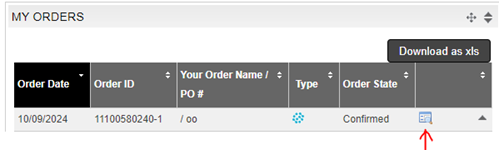
Please navigate to your “Account” -> “Orders” -> “My Orders”.

Here you can see all your orders listed.

For more detailed information please klick on the Tracking Details icon (see below). It leads you to our Order Tracking page where you can find all your samples and their current status.


Login to your Eurofins account with your e-mail address and password and click on “My Orders”, then on the icon next to your OrderID (see screenshot below).

You will find the files under section “DOWNLOAD DOCUMENTS & FILES”.


If you have received any compressed files, we recommend 7-ZIP (https://www.7-zip.org/) to uncompress them. Files will be deleted from our server 8 weeks after delivery.

Alternatively, you can access your data via our FTP server at ngs-ftp.eurofinsgenomics.eu using the username (the "ftp-" is part of the username) and password that you will receive in an email once your first data gets delivered. If you have forgotten your password, please enter ngs-ftp.eurofinsgenomics.eu to your browser and choose the "Forgot your password?" option.
 
Should you encounter any issues or have any queries, please do not hesitate to contact us.


Related Items

Sample shipment

Order your UPS label or use our dropboxes for sample shipment. Please note that it is mandatory to use free NGS barcodes for sample shipment.

How to retrieve my results

Below you can find instructions how to access your FTP folder or share your results with your colleagues.

                    Quality is important for us at Eurofins 


Our products and services are produced and performed under strict quality management and quality assurance systems.


Find Certificates here